
Introduction to Eco-Tourism
What is Eco-Tourism?
Eco-Tourism in Bangladesh think about going to a place where your footsteps don’t hurt the earth but actually help protect it. In a nutshell, that’s eco-tourism. It’s not just about seeing things. It’s about traveling to natural areas in a way that protects the environment, helps local communities, and teaches visitors.
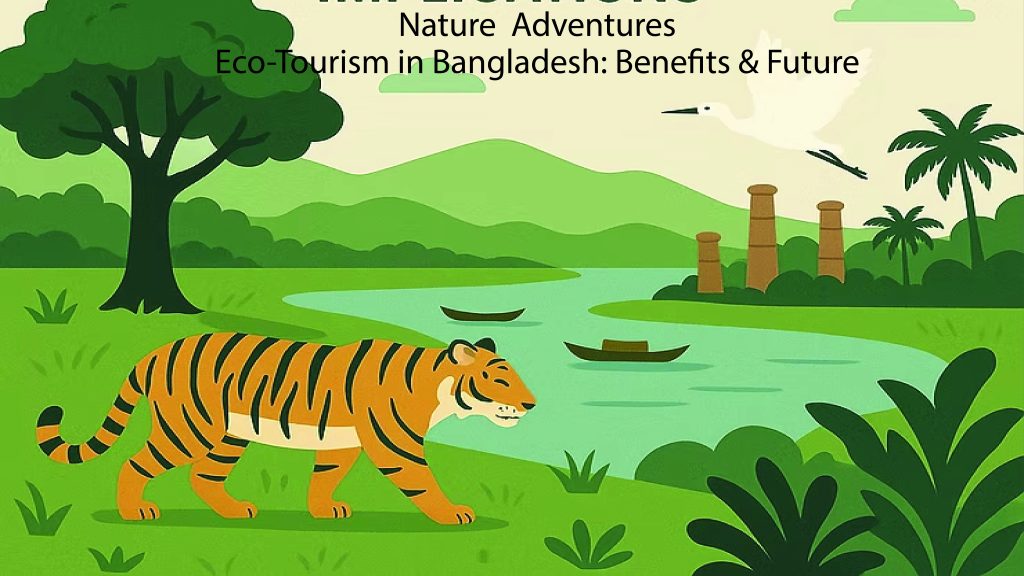
Eco-tourism is about forests, rivers, hills, wildlife, and cultural heritage instead of big hotels and crowded attractions. It’s travel with a purpose.
Why Eco-Tourism Is Important Now
Let’s be honest: our world is tired. It’s true that climate change, pollution, and cutting down trees are all real dangers. People who go on traditional vacations often leave behind plastic trash, carbon emissions, and ecosystems that have been harmed.
Eco-tourism changes the game. It makes tourism a way to protect the environment. And for a country like Bangladesh, which has a lot of different kinds of plants and animals but is also vulnerable to climate change, this is more important than ever.
Overview of Eco-Tourism in Bangladesh
A Country Rich in Natural Wonders
Bangladesh is small, but its natural beauty is huge. It’s as if nature wanted to show off here, with the world’s biggest mangrove forest and the longest natural sea beach.
You will see:
- Tea gardens with lots of green
- Hills that roll
- Waterfalls
- Forests in swamps
- Islands made of coral
It’s a paradise that needs to be explored in a responsible way.
The Growth of Eco-Friendly Travel Trends & Eco-Tourism in Bangladesh
People who travel today know more. People want more than just selfies. They want to connect with both nature and culture. This change has opened up a great chance for eco-tourism in Bangladesh.
More and more local tour companies are now offering eco-friendly travel packages. There are more and more eco-resorts. People are slowly becoming more aware.
That’s a good sign.
Bangladesh’s Most Popular Eco-Tourism Spots
The Mangrove Forest of the Sundarbans Eco-Tourism in Bangladesh
The Sundarbans is the best thing about Bangladesh. There are hundreds of bird species, the Royal Bengal Tiger, spotted deer, and crocodiles.
This UNESCO World Heritage Site is a living ecosystem. Eco-tourism here helps protect the forest and the local boat operators. Guided tours teach people about how to protect mangroves and keep wildlife safe.
It’s not just a journey. It’s a way to live and get along with others.
Marine Ecosystems and Cox’s Bazar
The 120-kilometer-long beach in Cox’s Bazar is well-known. But there is fragile marine life beyond the sand.
Eco-tourism programs encourage keeping beaches clean, protecting marine life, and fishing in a way that doesn’t harm the environment. Saint Martin’s Island, which is close by, has coral reefs that need to be protected.
The ocean is kind, but only if we treat it well.
The Tea Gardens and Srimangal
Srimangal, which is known as the “Tea Capital of Bangladesh,” looks like a painting come to life. The endless green hills with tea plants, tribal villages, and forest reserves make for the perfect eco-tourism setting.
Visitors can stay in eco-lodges, visit Lawachara National Park, and learn about the Khasi people who live there.
There is peace. It’s real. It’s long-lasting.
The Chittagong Hill Tracts and Bandarban
If you like adventure, Bandarban is the place for you. It is a great place for eco-tourism because of its hills, waterfalls, and tribal cultures.
Community-based tourism lets tourists stay in village homes, eat local food, and learn about native cultures. The money goes straight to families in the area.
You can see that effect.
The Ratargul Swamp Forest
Ratargul is a freshwater swamp forest that is often called the “Amazon of Bangladesh.” In the monsoon, the water is waist-deep, and the trees are tall.
When you boat through this magical forest, it feels like you’re in a different world. Controlled tourism makes sure that this rare ecosystem isn’t harmed too much.
Environmental Benefits of Eco-Tourism
Biodiversity Conservation
Eco-tourism gives people a reason to protect nature. Forests are less likely to be cut down if they make money from tourism.
Making money from conservation changes everything.
Protection of Endangered Species
Eco-tourism money helps the Royal Bengal Tiger, Asian elephants, and river dolphins. Fees for parks and guided tours help protect wildlife.
Tourists become witnesses and supporters of conservation.
Reduction of Environmental Damage
Eco-tourism encourages:
- Managing waste
- Using energy from renewable sources
- Less plastic
- Trekking with care
Little things can make a big difference.
Economic Benefits of Eco-Tourism
Job Creation for Local Communities
Eco-tourism gives people jobs in the following:
- Guides for tours
- People who drive boats
- People who work at hotels
- People who sell handicrafts
- Farmers in the area
People can make money in their own villages instead of moving to cities.
Boosting Rural Economies
Tourists’ money stays in the area. It helps small businesses and makes rural economies stronger.
It’s like planting a seed of money that keeps growing.
Supporting Local Business Owners
Young business owners are starting eco-friendly resorts, travel agencies, and tour companies. Innovation is doing well.
Traveling for eco-tourism is more than just going places. It’s a chance.
Social and Cultural Benefits
Empowering Indigenous Communities
Tourism directly helps indigenous groups in places like Bandarban and Rangamati. They show off their culture in their own way.
That gives people pride and the ability to support themselves.
Preserving Local Traditions
Tourism makes people want traditional crafts, music, and food. Cultural practices don’t go away; they come back to life.
Promoting Cultural Exchange
Travel breaks down stereotypes. People who come learn about life in the country. People from all over the world come to meet locals.
It’s connection, not confusion.
Challenges Facing Eco-Tourism in Bangladesh
Environmental Threats and Climate Change
Bangladesh is dealing with floods, cyclones, and rising sea levels. These are bad for eco-tourism spots like the Sundarbans.
It’s very important to be able to handle climate change.
Poor Infrastructure
Eco-tourism may not be as popular if there aren’t many roads, waste systems, or places to stay.
Smart development is better than harmful development.
Lack of Awareness and Policy Gaps
Not everyone knows what eco-tourism is. Some businesses use the word wrong and don’t do what they say they will do.
We need better rules and more education.
Government Initiatives and Policies
Sustainable Tourism Policies
The government has put in place rules that encourage responsible tourism and protecting the environment.
More and more areas are becoming protected. Rules are getting better.
Role of Bangladesh Tourism Board
The Bangladesh Tourism Board promotes eco-friendly places to visit and raises awareness around the world.
Making Bangladesh known as a green place to visit is becoming more important.
Role of Private Sector and NGOs
Community-Based Tourism Projects
NGOs help train local guides and push for sustainable tourism models.
Tourism makes communities partners, not victims.
Green Investments and Eco-Resorts
More and more resorts are using solar power, hotels are going plastic-free, and food services are going organic.
Green is no longer a choice. It’s very important.
The Future of Eco-Tourism in Bangladesh
Smart Tourism and Technology
Digital booking systems, virtual tours, and eco-certifications can help build trust and make things more clear.
Technology can help make things last longer.
Youth Engagement and Innovation
Young people in Bangladesh care deeply about climate action. New businesses that focus on eco-tourism are starting to pop up.
The future looks bright.
Opportunities Around the World
Bangladesh can get eco-tourists from all over the world who want real experiences if it markets itself well.
People all over the world are looking for hidden gems. One is Bangladesh.
How Tourists Can Support Eco-Tourism
Responsible Travel Tips:
- Stay away from plastic
- Respect animals in the wild
- Stay on the trails that are marked.
- Pick places to stay that are eco-friendly.
- Don’t throw trash on the ground.
Things that are easy to do matter.
Helping Local Businesses
Buy arts and crafts from your area. Eat food from your area. Get local guides.
Your money is your voice. Use it wisely.
In conclusion
Eco-tourism in Bangladesh is not just a trend; it’s a way to help the country grow in a way that lasts. It protects forests, gives people more power, helps the economy, and keeps culture alive. Yes, there are problems. But what about the potential? Very big.
If done right, eco-tourism could make Bangladesh a global model for how development and nature can work together.
The question is not if Bangladesh should put money into eco-tourism. The question is, how quickly can it grow in a responsible way?
Frequently Asked Questions
1. What is the best place in Bangladesh for eco-tourism?
Because of its unique mangrove ecosystem and wildlife, the Sundarbans is thought to be the best place for eco-tourism.
2. What are the benefits of eco-tourism for communities?
It creates jobs, helps small businesses, and lets people in communities make money while protecting their culture and environment.
3. Is it expensive to go eco-tourism in Bangladesh?
Not always. Compared to luxury tourism, many eco-tourism experiences are cheap and offer great value.
4. What are the biggest problems with eco-tourism in Bangladesh?
The main problems are climate change, bad infrastructure, and not enough people knowing about them.
5. What are some ways for tourists to be responsible travelers in Bangladesh?
By cutting down on waste, respecting local cultures, supporting local businesses, and staying in eco-friendly places.