
An Overview in Tajhat Jamidar Bari Rangpur’s
Tajhat Jamidar Bari Rangpur’s tale of culture, power, and ongoing transformation, Tajhat Jamidar Bari Rangpur is more than just a tale of buildings and structures. The northern Bangladeshi city of Rangpur is home to this stunning palace. When I consider the Zamindari period, I am proud. Constructed in the early 1900s, Tajhat Jamidar Bari is a symbol of prosperity, aspiration, and refinement. Because it is so powerful and symmetrical, people still notice it now.
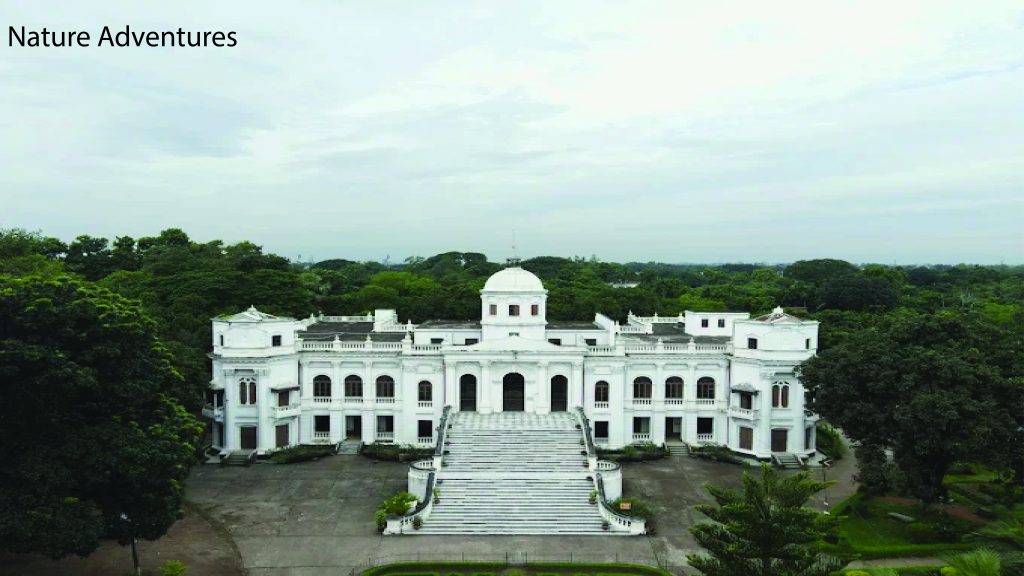
At first glance, the palace resembles something you could see in Europe. On closer inspection, however, you will notice that art is everywhere. It is distinctive because of this. Over the years, the building’s purpose has evolved from private residence to public museum. However, the building’s essence remains unchanged. Its power is still felt subtly by people.
Additionally, the palace serves as a crucial bridge between the past and present. Curiosity and pride are among the many reasons people visit this place. Examples include visitors, students, and historians. To put it briefly, Tajhat Jamidar Bari is a storyteller that never stops telling tales rather than merely a monument.
The Tajhat Jamidar Family’s Home
You must be familiar with the family that constructed the palace in order to comprehend it. The Tajhat Jamidar family rose to prominence in the late Mughal and early British eras. They were wealthy landowners with a reputation for being capable managers and devoted to those in authority. They possessed a great deal of territory and power because of this.
The majority of the family’s income came from farming. They produced rice, jute, and other crops, which made them wealthy. They didn’t simply hoard their money, though. Rather, they utilized their funds to fund public health, education, and infrastructure. To aid them, they provided funding for water systems, roads, and schools.
Naturally, constructing a large home was a means of bragging. It read, “We matter, and we fit in here.” Tajhat Jamidar Bari was created in this manner. The palace represented power, security, and a fulfilling existence. It was revered even by its adversaries.
It’s intriguing that members of the family were also recognized for their cultural pursuits. Books, music, and art all flourished at the palace. For this reason, Tajhat became a center of culture as well as a location for government administration.
The Magnificence and Design of Architecture
History truly comes to life in Tajhat Jamidar Bari’s architecture. The palace was constructed in a blend of native and European neoclassical styles, giving it a unique yet recognizable appearance. It seems expansive and commanding because of the broad steps, massive columns, and lengthy passageways.
Effects of Europe Tajhat Jamidar Bari Rangpur’s
Europe had an impact, as seen by the adoption of symmetry and Corinthian columns. The large arched windows bring in plenty of natural light. The landscape is more intriguing and well-balanced because of the center dome-like structure. When the British were in power, wealthy households enjoyed these items.
Artistry in the region Tajhat Jamidar Bari Rangpur’s
However, regional artisans also left their stamp. Its hand-carved features, ornamental railings, and floral motifs make the formal structure appear less severe. Brick and marble were among the materials we carefully selected to ensure their durability and aesthetic appeal.
Clearly, the design conveys the message, “Power with grace.” Not surprisingly, architects continue to study this structure today.
Its actions during the British occupation
The local population and those employed by the British colonial authority were known as zamindars. The government was headquartered at the Tajhat Jamidar Bari. Here, people discussed policy, paid taxes, and resolved disputes.
British guests also stayed at the palace. Fancy meals and gatherings were common. These incidents strengthened political bonds and safeguarded the rights of families. At the same time, they demonstrated to the local elite how Westerners live.
It wasn’t all games and fun, though. The Zamindari system was not without issues. High levels frequently made life difficult for farmers. Over time, the rage intensified. Nevertheless, Tajhat Jamidar Bari remained a symbol of authority until the system’s demise in 1950.
Value for Society and Culture Tajhat Jamidar Bari Rangpur’s
Politics and social life both benefited from the palace. Numerous cultural events took place there, including festivals and weddings.
Participating at Festivals and Living in the Community
The palace opened to the public during religious holidays. There were large gatherings with an abundance of food. People were inspired to remain faithful by this kindness.
A lot of artists and academics also came. People often played music and read poems at night. These events made Rangpur’s cultural life better and had a lasting effect. Restoration, Conservation, and Reduction.
The palace’s upkeep ceased when the zamindari system was abolished. Operations were hard to sustain without private support. They were exhausted by the time and the weather.
However, the government recognized its value. The process of making things better began gradually. The building’s beauty was restored through landscaping, repairs, and relic protection. Because it was well cared for, it is still standing strong today.
Tajhat Jamidar Bari has been turned into a museum.
The Rangpur Museum is currently housed in the palace. Inside, visitors may view ancient documents, coins, sculptures, and inscriptions. A distinct aspect of Bangladesh’s history is shown in each presentation.
People frequently travel for education. Students learn about history from the walls that existed at the time, not from books. According to historical documents and open sources, the museum plays a critical role in preserving the history of the region.
Impacts on tourism and the economy
Due to tourists, the region is once again vibrant. Hotels, shops, and tour guides all perform better while tourists are in town. The local economy benefits from this.
Additionally, and this is crucial, tourism is a terrific method for people to learn more. When people wish to preserve history, they care about it. Tajhat Jamidar Bari demonstrates how tradition may foster development.
The Value of Education and Questioning
In order to understand more about how people lived and constructed things in the colonies, researchers examine the palace. Many local colleges and institutions organize field trips. Things in this classroom are touchable.
Bangladesh’s Legacy Today: Tajhat Jamidar Bari Rangpur’s
The heritage of Tajhat Jamidar Bari Rangpur continues to inspire pride. It serves as a reminder of how robust, adaptable, and rich their culture is. Despite the rapid changes in the globe, the palace remains sturdy.
Conclusion
In conclusion, the history of Tajhat Jamidar Bari Rangpur represents a powerful blend of art, authority, and adaptation, reflecting the transformation of Bangladesh. Visiting the site offers an experience akin to time travel.
The answers to these issues are of interest to many.
- The Tajhat Jamidar Bari is located where?
It is located in the northern Bangladeshi city of Rangpur.
- When was the palace built?
Early in the 20th century. The family of Tajhat Jamidar created Tajhat Jamidar Bari.
- Now, what is the palace doing?
It’s a museum.
- Does the public have access to it?
Indeed, it is always open.
- What used to make it significant?
It depicts the history of colonization, how many architectural styles coexisted, and what life was like for zamindars.